
Share this
by Don Kline on January 12, 2026
How AI will transform the experiences of attendees, exhibitors, organizers at events
Artificial intelligence is no longer a future concept for the trade show industry. It’s already shaping how planners, marketers, and attendees approach events. In 2026, AI at trade shows won’t be a nice-to-have feature. It will be a core part of how large events deliver value to attendees, exhibitors, and organizers.
Using AI at events is not about replacing people or automating relationships. In practice, AI should be doing the opposite. When applied intentionally, AI removes friction, reduces guesswork, and provides better information so humans can focus on what they came to the show to do: build meaningful connections between buyers and sellers.
Technology and social media have made the in-person trade show experience is more important than ever. AI will help attendees discover the right products and services, help exhibitors have better conversations, and help organizers protect and grow event revenue.
AI will fundamentally change the working experience for each stakeholder in the trade show industry in 2026 in three key ways:
-
AI will make human connections more valuable
-
AI will make your event unique and personalized for every attendee
-
AI will directly increase trade show revenue
With these in mind, I’ll explain how they play out for the attendee, exhibitor -and finally- you the event organizer and share why you should be preparing now.
How AI Will Change Trade Shows for Attendees in 2026
For attendees, AI fundamentally changes how value is created at a trade show. Instead of navigating the event through trial and error, attendees will rely on AI to help them prioritize, personalize, and maximize every hour on site—turning a complex schedule into a guided experience built around their goals.
How AI Puts All Trade Show Data First
Large events can be overwhelming. Hundreds of sessions, limited time, and thousands of exhibitor’s force attendees to make quick decisions without much context. This is where an AI assistant at large events becomes transformational.
By analyzing all the information available including, attendee profiles, stated interests, past behavior, and real-time activity, an AI assistant on your trade show mobile app or website can recommend:
- Exhibitors and products that solve what their business needs
- Educational sessions aligned with the attendee’s career goals or interests
- Networking opportunities with people they are most likely to benefit from meeting
This level of personalization gives attendees the clarity to make confident decisions about how to spend their time.
How AI Assists Attendees With Useful Event Data
Attendees will increasingly interact and rely on AI-driven assistants during events rather than using search engines or scrolling through websites. An AI assistant will use their behavior to recommend exhibitors, sessions and products. With AI assistants curating the attendee experience, they will showcase more information about your event at the best time for the engaged attendee to use that information.
For example, an attendee might ask:
- “Which exhibitors specialize in this category?”
- “What’s the fastest route to visit these booths between my sessions?”
The AI assistant at a large event can instantly show where exhibitors they are seeking are located, recommend the most efficient path through the show floor, and even adapt with attendees in real time if they are delayed or make unexpected changes. The AI Assistant will focus on helping them make the most of their limited time and improve their on-site experience by providing clarity to a complex day.
How AI Improves Attendee ROI at Large Events
Professionals often view event attendance as an investment in themselves or their business. While their return isn’t always measured in direct revenue, it’s measured in perceived value between the learning they experienced, useful connections they’ve made and the exhibitors they have met at the event.
In addition to helping attendees get the most from their show experience, AI helps attendees zero in on their specific goals for that trade show. This transforms AI from a convenience tool into a value multiplier for every attendee.
Whether the goal is career growth, industry insight, or business development, AI will help attendees achieve what they came for. When they leave feeling successful, they’re far more likely to return and stay engaged with the event brand long after the event ends.
How AI Will Change Trade Shows for Exhibitors in 2026
For exhibitors, AI shifts the trade show model from attendee based searching to active opportunity creation. Instead of relying on the attendee to find them, exhibitors can use AI to focus their time, resources, and conversations on the prospects that matter most.
How AI Drives Higher-Quality Booth Conversations Not Just More Traffic
Instead of hoping the right people find their booth, exhibitors can use AI to attract the right attendees leading to better conversations, clearer ROI and stronger pipelines.
AI can:
- Guide high quality attendees to the exhibitors’ booths
- Suggest meetings by matching attendee and exhibitor profiles
- Highlight products based on shared interests or buying signals
For exhibitors, less generic booth traffic and more meaningful conversations. This shifts exhibitors outcome expectations from quantity to quality—resulting conversions from prospect to customer, stronger ROI, and long-term exhibitor satisfaction.
How AI Delivers Real-Time Booth Performance and Lead Insights
Exhibitors won’t need to wait until after the show to understand or act upon booth performance. AI will surface visitor data throughout the event, highlighting:
- Which leads are the most important to focus on
- Overlapping areas of interest between the attendee and exhibitor
- What kind of follow-up message will resonate with the attendee
AI can also assist with personalized follow-up messaging, informed by what attendees actually engaged with. Making the follow up outreach more relevant, timely and improves conversions.
How AI Helps Exhibitors Prove and Defend Trade Show ROI
With AI helping drive targeted traffic, schedule meetings, and prioritize follow-up, exhibitors leave events with quality prospects and stronger pipelines. Instead of relying on anecdotal success, they can see exactly how engagement on the show floor turned into real conversations and qualified opportunities.
This level of clarity makes trade show ROI easy to justify. When exhibitors understand what worked, who engaged, and what they are interested in, the value of the event becomes defensible and repeatable. That insight is one of the strongest drivers of rebooking decisions and long-term exhibitor loyalty. Your Exhibitors need organized engagement data, information about interactions, and performance signals brought into a clear, exhibitor-friendly view in the same place that they interact with your event.
When exhibitors leave your trade show with a strong pipeline of qualified leads and clear insights on how to continue those conversations, your event becomes a vital channel for their business. They are more likely to rebook, invest in higher-value sponsorships, and bring additional team members because they can clearly justify the spend. Your show is no longer something they attend out of fear of missing out. It becomes a proven driver of business results.
How AI Will Change Trade Shows for Event Organizers in 2026
For event organizers, AI provides the tool that has been long sought. Giving a hyper-personalized experience to each attendee based on their needs. AI and AI Assistant are unique in their ability to process data and provide actionable output in real-time. As an organizer this can also provide visibility that has historically been difficult to see- let alone act upon- during live events.
How AI Helps Event Organizers Protect and Grow Trade Show Revenue
Behind the scenes is where AI becomes especially powerful for organizers. By analyzing engagement, booth traffic, meeting activity, and attendee interactions, AI can surface trends and risks that are easy to miss during live execution.
AI can identify exhibitors at risk of not returning—often before they realize it themselves—allowing organizers to step in early with support, visibility adjustments, or new opportunities that improve outcomes and protect revenue.
How AI Interprets Event Data Beyond Traditional Metrics
For organizers, AI won’t just interpret existing event data. It will create new data sets.
Beyond session attendance and booth visits, AI can surface:
- Current attendee needs and interests not being addressed
- New categories that the event sales team should focus on
- Adjacent markets that could be added to the event
- Inform attendee acquisition campaigns
- And even more…
These insights help organizers make smarter decisions during the event and plan future shows with greater confidence.
How AI Improves Exhibitor Retention and Event Growth
When AI helps attendees and exhibitors achieve their goals, the value of the event becomes tangible. More meetings, better connections, and clearer outcomes lead to higher satisfaction.
When outcomes are measurable and experiences feel intentional, satisfaction compounds across every stakeholder group. That satisfaction translates into:
- Higher exhibitor retention
- Increased booth sales and sponsorship upgrades
- Attendees more likely to return year after year
AI supports revenue growth by improving the experience and making the pipeline to sales flow better.
If AI is not yet part of your event improvement strategy, now is the time to act. Investing in digital infrastructure that supports better decisions, stronger relationships, and more resilient event revenue will compound in value as AI becomes more capable and human expertise grows alongside it.
Why AI at Trade Shows Is About Amplifying Human Connection
In 2026, AI used by trade shows will be less about novelty or utility, it will be about execution. AI will answer questions in the moment, guide attendees toward better decisions, help exhibitors clearly understand their ROI, and give organizers the insight they need to build stronger, more profitable events.
AI isn’t changing why people attend trade shows, but it will change how they achieve the goals they arrive with. The most successful trade shows won’t be the ones just using AI. They will be the events that use AI intentionally. When deployed well, AI becomes the ultimate assistant—anticipating needs, reducing friction, and support the human interactions that make in-person events valuable in the first place. Even better, the more AI is used the more it learns and improves day after day and year after year.
If you want to see what this looks like in practice, join our upcoming webinar where we’ll break down how AI is already being used at large events today, what’s coming next, and how event teams can start preparing now.
Request the latest webinar recording and learn how AI can help you deliver smarter, more valuable trade show experiences.
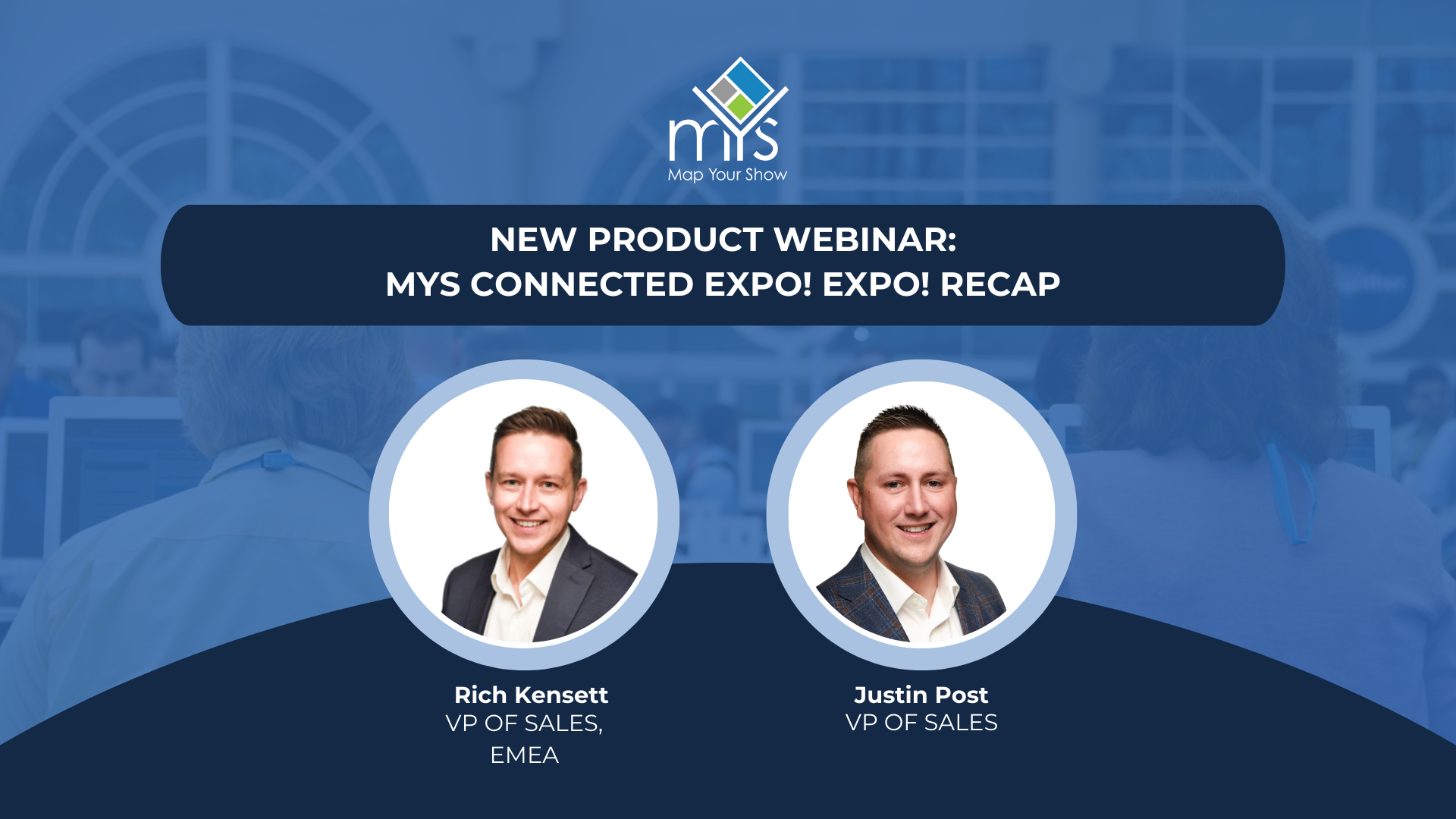
MYS Connected Presentation Webinar
We recently exhibited at Expo! Expo! and showed off our latest product MYS Connected. Powered by artificial intelligence, MYS Connected delivers a hyper-personalized event experience to every attendee. If you did not get a chance to stop by our booth or join us for our webinar to see this new technology, you can request the webinar recording for a recap of everything we showcased, including MYS Connected, our AI Assistant (Lina), new Networking features, and the new Attendee Floor Plan with Walkable Directions.
